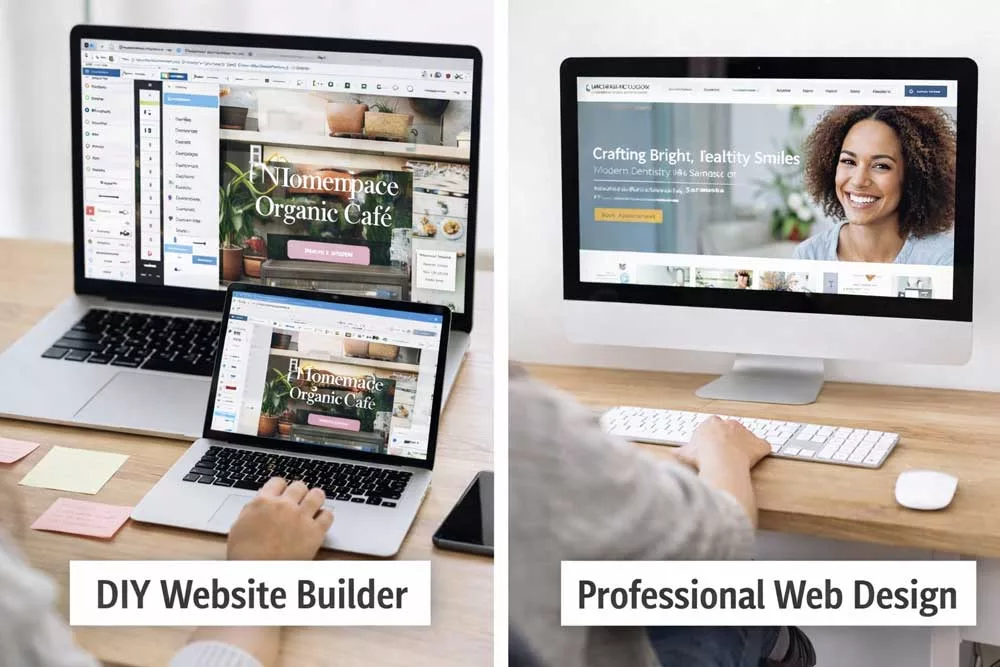
If you’re a small business owner, chances are you’ve thought about building your own website. With platforms like Wix, Squarespace, and GoDaddy promising quick and affordable solutions, it’s an appealing option.
But is it the right one for you?
The truth is, both DIY website builders and professional web design have their place. The key is understanding the difference—not just in cost, but in results.
Let’s take a closer look so you can make the best decision for your business.
DIY platforms are designed to make website creation accessible.
They offer:
If you’re just starting out, testing an idea, or need something simple to establish an online presence, they can be a practical solution.
But while they make things easier on the surface, they don’t always address what happens next—getting found, building trust, and converting visitors into clients.
The biggest limitation of DIY builders isn’t design—it’s strategy.
Templates are built to look good, but they’re not tailored to your business, your audience, or your goals. They don’t guide you in structuring your content, highlighting what makes you different, or leading visitors toward taking action.
There’s also a learning curve that many people underestimate. What seems like a quick project can turn into weeks of trial and error—adjusting layouts, troubleshooting issues, and trying to piece together SEO best practices along the way.
In the end, you may have a website… but not one that’s truly working for you.
You can see an example of how a redesigned site improved both visibility and usability in this recent project.
Working with a professional shifts the focus from “building a website” to building something that supports your business.
That includes:
It’s not just about making things look polished—it’s about creating a site that feels easy to navigate, builds confidence, and encourages people to reach out.
If you’re curious what working with a designer actually looks like, you can explore my website design services here.
One of the biggest differences between DIY and professional websites is how well they perform in search.
A strong SEO foundation includes:
These aren’t things most DIY users think about—and they’re not always built into templates in a meaningful way.
So while your site might look great, it may not show up when potential clients are searching for your services.
And if you’re not being found, your website isn’t doing its job.
DIY builders are often chosen because they seem more affordable.
But it’s worth asking: what is your time worth?
Many business owners spend:
Hiring a professional is an investment, but it’s also a way to avoid that learning curve and get to a finished, functional website much faster.
In many cases, it ends up being more efficient—and less stressful.
I also offer affordable website options designed specifically for small businesses…
Another important consideration is what happens as your business evolves.
DIY platforms can become limiting when you want to:
A custom-built website gives you more flexibility and control, making it easier to grow and adapt as your needs change.
There are definitely situations where DIY makes sense.
For example:
In those cases, a simple solution can be a smart stepping stone.
But if your website is meant to play a central role in your business, it’s worth thinking beyond the short term.
It really comes down to your goals.
If you’re looking for:
A DIY builder may be enough.
But if you want a website that:
Working with a professional web designer is often the better long-term choice.
At first glance, DIY website builders are more affordable. But when you factor in the time spent learning the platform, troubleshooting issues, and trying to optimize for search engines, the real cost can add up quickly. Hiring a web designer is an upfront investment, but it often saves time and leads to better long-term results.
It can—but it’s much harder without a solid understanding of SEO. Most DIY websites miss important elements like proper structure, keyword strategy, and internal linking. Without those, it’s difficult to compete with professionally built sites.
It varies, but many business owners spend weeks or even months trying to get everything just right. What seems simple at first often becomes more time-consuming as you try to fine-tune design, content, and functionality.
If your website is an important part of your business—bringing in leads, building credibility, and representing your brand—it’s usually worth hiring a professional. A well-designed site can make a significant difference in how your business is perceived and how easily clients can find you.
Not at all. With the right setup, you’ll still have full access and control. A good designer will build your site in a way that allows you to make updates easily, while also being available if you need support.
If you’re still weighing your options, you don’t have to figure it out alone.
I’m always happy to take a quick look at your business and offer honest, straightforward feedback—no pressure, no jargon.