Call: 914-907-2037

Menu
close
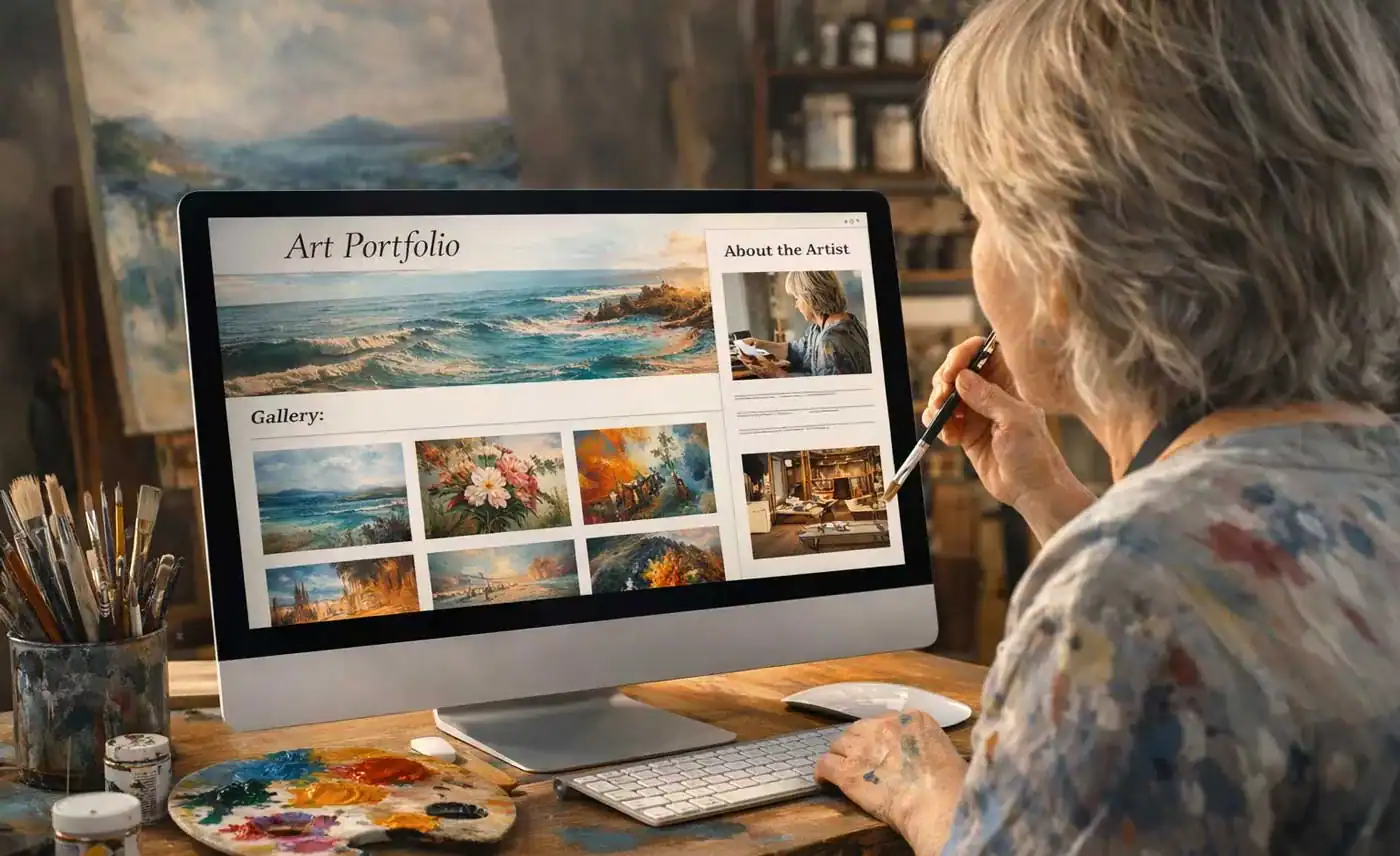
For artists today, a website is far more than a digital business card. It’s your online gallery, your portfolio, and often the first place collectors, curators, and art lovers encounter your work.
As we move into 2026, artist websites are becoming more refined, more immersive, and more focused on presenting artwork beautifully without unnecessary distractions. A well-designed artist website allows visitors to experience the work naturally while also telling the story behind the artist.
Whether you're a painter, photographer, sculptor, or musician, a thoughtfully designed website helps you stand out in a crowded online world.
The biggest artist website trends for 2026 focus on clean presentation, immersive visuals, and mobile-friendly portfolio design. Artists are moving toward minimalist layouts that allow artwork to stand out, along with large image galleries, subtle animations, and stronger storytelling about the artist behind the work.
Modern artist websites also prioritize fast loading speeds, responsive design for mobile devices, and search-friendly portfolio structures that help collectors and galleries discover new artists online.
• Clean minimalist portfolio layouts
• Large high-resolution artwork galleries
• Subtle motion and hover effects
• Mobile-first design for art portfolios
• Strong storytelling about the artist
• Search-optimized portfolio structure
Mini malism continues to dominate artist website design. Clean layouts with generous white space allow the artwork itself to take center stage without visual distractions.
Rather than cluttered pages or busy backgrounds, modern artist websites rely on thoughtful spacing, refined typography, and simple navigation. This creates a viewing experience that feels similar to walking through a gallery.
Minimal design doesn't mean plain — it means intentional. Every element on the page serves a purpose and helps guide the viewer’s attention toward the work.
 High-resolution images and full-screen galleries are becoming essential elements of modern artist websites. Visitors want to see artwork clearly and experience it visually, even when browsing online.
Many artists are also incorporating subtle interactive elements like smooth scrolling, hover animations, and elegant image transitions. These details add sophistication to the site while still keeping the artwork as the main focus.
The goal is to create an online space that feels curated and immersive, allowing viewers to connect with the work more deeply.
 Today, a large percentage of visitors discover artists through mobile devices. Because of this, artist websites must be designed to work beautifully on phones and tablets as well as desktop screens.
Responsive design ensures images resize properly, galleries remain easy to navigate, and text stays readable on smaller screens. A mobile-friendly website helps ensure collectors, galleries, and fans can explore the artist’s work smoothly no matter how they access the site.
When a portfolio is easy to view on any device, it creates a professional impression and encourages visitors to spend more time exploring the work.
Collectors often connect with the story behind the artwork just as much as the work itself. Artist websites are increasingly incorporating personal narratives, studio photography, and insights into the creative process.
An artist statement, biography, and occasional blog posts help visitors understand the ideas and inspiration behind the work. This kind of storytelling builds a deeper connection with the audience and helps distinguish an artist in a competitive field.
A thoughtfully designed website becomes a platform for sharing both the artwork and the vision behind it.
A strong artist website combines thoughtful design, clear presentation, and search visibility. When these elements work together, the site becomes more than just a portfolio — it becomes a professional platform that helps artists share their work with a wider audience.
With more than 40 years of experience in visual design and branding, I approach artist website design with a deep appreciation for how presentation influences the way artwork is experienced online.
A well-designed website allows artists to showcase their work beautifully, tell their story, and create a lasting impression on visitors around the world.